SS Benefit Collection Times
On average, how much longer do current Social Security recipients collect benefits than Americans in 1940?
Correct Answer
Due to increases in life expectancy without comparable increases in the ages that people receive SS benefits, males currently collect benefits for an average of 36% longer than in 1940, and females collect 40% longer. Contrary to popular belief, SS doesn’t save people’s money but pays beneficiaries mainly by taxing people who are currently working. In contrast, “federal law requires private pension plans to operate as funded plans” to increase “benefit security” and ensure “intergenerational equity.” Because SS doesn’t operate like that, politicians have levied increased SS tax burdens on succeeding generations of Americans to keep the program solvent, thus creating severe generational inequality. Unless retirement ages are raised or benefits are reduced in some other way, taxes will need to be increased again to keep the program afloat. Also contrary to common fictions, the SS Trust Fund hasn’t been looted, and no money has been diverted from SS to the SSI program.
School Choice Effects
This is the latest In Fact. Click the left arrow for earlier ones.U.S. Senator Mark Kelly (D–AZ) claims that he’s “fighting to stop” the “Republicans’ national school voucher program” because it “drains resources from” public schools, and he wants to “keep improving” them.
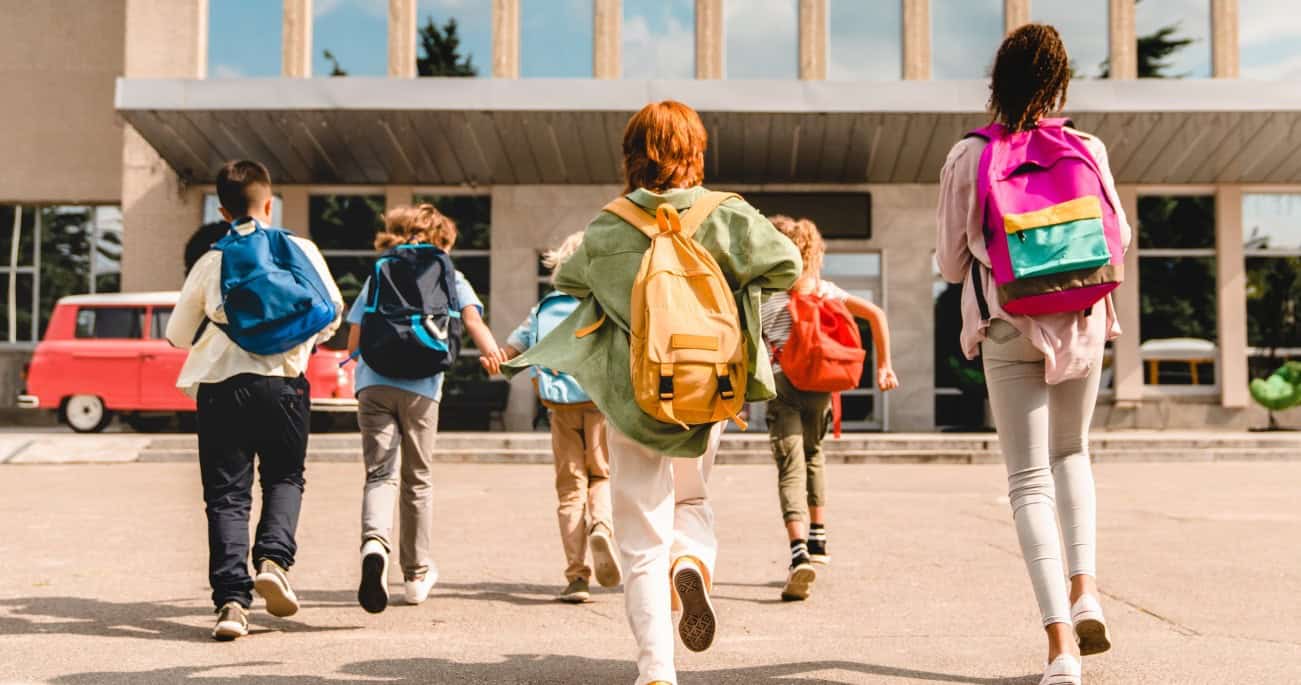
IN FACT, the program doesn’t drain any resources from any public schools, and school choice improves both the performance and finances of public schools. Here are the specifics:
- In 2025, Congressional Republicans and President Trump passed the One Big Beautiful Bill, which created a “federally funded tax credit” for “scholarships to students at private and public” schools starting in 2027.
- These scholarships can be used by both private and public school students for “tuition, fees, books, supplies,” “tutoring,” “special needs services,” “room and board, uniforms, transportation,” “extended day programs,” “computer technology, equipment, or internet access.”
- The scholarships aren’t funded with money from public schools, but opponents of the program argue that its projected costs of $2.6 billion per year would be better spent on more funding for public schools.
- Average inflation-adjusted spending per public school student has risen by 25 times since 1920, average spending per classroom is now more than $400,000 per year, and a study published by the Brookings Institution in 2025 found that “substantial increases in per-pupil spending over time have often been met with stagnant academic achievement.”
- Contrary to a group of “top education experts” who allege that higher spending is “especially” helpful for “low-income students,” the Brookings study found that “school spending in some states is more than twice that in others,” but “economically disadvantaged students in higher-spending states don’t achieve better outcomes compared to their counterparts in lower-spending states.”
- Consistent with the theory that school choice stimulates competition that induces public schools to improve, a study published in 2022 by the journal Education Next found that “increased competition” from a Florida school choice initiative was associated with benefits for 90% of public school students and no harms for the other 10%.
- Likewise, a systematic review of 21 “high-quality” studies about the academic outcomes of U.S. students who remain in public schools in areas with school choice programs revealed that “all but one of these 21 studies found neutral/positive or positive results” on public school students, and none of the studies found negative results.
- While ignoring all evidence on the benefits of school choice, teachers unions and politicians like Mark Kelly, Bernie Sanders, and Dick Durbin argue that school choice harms public schools by draining funds from them.

- In reality, the “gold standard in school finance” is funding per student (not funding per school), and school choice boosts public school funding per student because the public schools don’t have to educate the students who go to private schools, which cost an average of 37% less per student than public school.

- While improving the finances of public schools, school choice financially harms teachers unions by depriving them of dues, and this harms Democrat politicians who have received more than $250 million in federal political donations from the two largest teachers’ unions and significantly more than that on other activities to elect Democrats.
- Prominent opponents of private school choice — like Elizabeth Warren, Barack Obama, Joe Biden, and Bill Clinton — personally attended and/or sent their own children to private K–12 schools.