“Medicare for All”
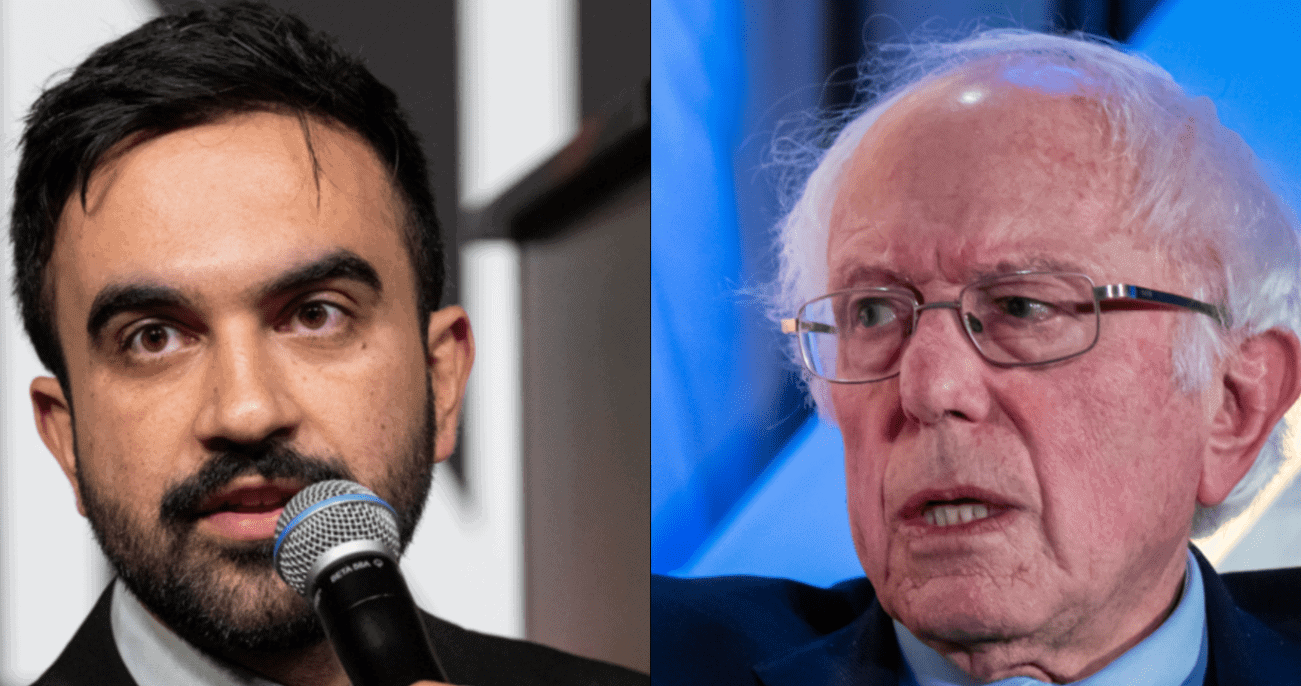
Based on a study from “Yale University researchers,” Bernie Sanders claims that his “Medicare for All” plan “would save 114,000 lives and reduce overall healthcare spending in America by more than $1 trillion a year.”
IN FACT, the study touted by Sanders is based on models, a notoriously unreliable methodology, and the models in this study are laced with counterfactual assumptions. Here are the specifics:
- The study touted by Sanders appears in a working paper that uses a “health-expenditure model” and a “mortality model” to calculate the figures that Sanders presents.
- As explained by 22 scholars in the scientific journal Nature, “models produce highly uncertain numbers,” and “politicians must not be allowed to offload accountability to models of their choosing,” as Sanders does.
- Likewise, a paper published by the journal Review of Environmental Economics and Policy states that “models sometimes convey the impression that we know much more than we really do,” and “they create a veneer of scientific legitimacy that can be used to bolster the argument for a particular policy.”
- Thus, the UK’s public health agency warns that model-based studies “provide only theoretical evidence,” and “we, therefore, cannot recommend the use of modelling studies alone as evidence to inform or change policy measures.”
- The “mortality model” of the study touted by Sanders assumes that uninsured people are 40% more likely to die each year than if they were covered under Sanders’ plan — despite the fact that life expectancy was stagnant for six years after Obamacare added 20 million people to insurance rolls. This was the worst six-year period for life expectancy progress since World War II and runs contrary to the modern norm of rising lifespans.
- Moreover, a gold standard randomized controlled trial of Medicaid expansion in Oregon published by the New England Journal of Medicine found that “Medicaid coverage generated no significant improvements in measured physical health outcomes in the first 2 years,” the total time the study was conducted.
- The study touted by Sanders pulls its 40% more-likely-to-die figure from a 2009 study in the American Journal of Public Health that incorporates numerous years of deaths (not just one year) and suffers from the following flaws and more: (1) The “40%” figure is actually 6% to 84% once the margin of sampling error is considered. (2) The study used false pretenses to exclude people with Medicaid insurance. (3) It was an observational study, which can only reveal associations and cannot determine the effects of insurance.
- The study touted by Sanders ignores a 2009 study in the journal Health Services Research that has sounder methodologies than the study above and found “no indication that lack of insurance has any effect” on people who died of causes that are generally preventable with better healthcare.
- The study touted by Sanders also ignores a 2019 meta-analysis in the Annals of Family Medicine that found “social and behavioral factors account for substantially more of the variability in premature mortality than health care does,” and only “0% to 17% of premature mortality” is “attributable to deficiencies in health care access or delivery.”
- The study touted by Sanders assumes that underinsured people are 25% more likely to die each year than if they were covered under Sanders’ plan — despite the fact that a gold standard randomized controlled trial conducted by Rand Corporation found that healthcare cost sharing prevents medical spending that has “little or no” effect on health outcomes except for the poorest 6% of the population, who are already covered by Medicaid.
- Likewise, a study published by the American Journal of Public Health analyzed insurance coverage levels and health outcomes of “an older, chronically ill population” and found “no association between cost sharing and health status,” just like other studies that “have also failed to observe any negative health effect from cost sharing.”
- The study touted by Sanders assumes that his plan will save $100 billion per year by preventing “emergency and inpatient care that timely access to primary care would make unnecessary” — despite the fact that gold standard randomized controlled trials published by the journal Science and the New England Journal of Medicine found that no-copay Medicaid coverage increases expensive visits to emergency rooms for “conditions that may be most readily treatable in primary care settings,” contrary to Barack Obama’s claim that the opposite would occur.
- The study touted by Sanders claims that his “Medicare for All” plan is “similar” to “Medicare,” but in reality, it differs from Medicare and is similar to Medicaid in that there are no “deductibles, coinsurance, copayments, or similar charges” except for a $200 annual maximum copay for prescription drugs.
- Sanders’ plan for virtually no out-of-pocket healthcare costs doesn’t exist anywhere in the OECD because it would create a buffet mentality in which people wantonly consume with no regard for costs.
- The study touted by Sanders claims that his plan will save $296 billion per year by the “application of Medicare payment rates to all” healthcare providers — despite the fact that Medicare pays hospitals an average of 17% below their costs of caring for Medicare patients, thus forcing hospitals to shift these expenses to other patients.
- The study touted by Sanders claims that its “estimates” are “conservative” because they exclude the “savings that follow from earlier diagnosis and preventive care” — despite the fact that a broad array of studies have found that earlier diagnosis and preventive care increase healthcare costs because if “we eliminate a specific cause of death, we simply die later from another. In the meantime we grow older, become generally more disabled, and need more care.”