Due Process & ICE Detention
U.S. Congresswoman Pramila Jayapal (D–WA) claims that the Trump administration has “denied proper due process” to ICE detainees in “at least 10,000 cases.”
IN FACT, Jayapal’s allegation is rooted in a Politico article that repeatedly distorts the truth. Here are the specifics:
- Politico’s article, written by Kyle Cheney, reports that more than 425 federal judges, including a “majority of Trump-appointed judges,” have “ruled against ICE detention practices” in nearly 10,400 cases” since the Trump administration “mandated that millions of immigrants must be locked up while they face deportation proceedings.”
- In reality, Cheney fails to disclose how many of these cases involved Democrat- or Republican-appointed judges, how many of them involved district court judges who were “obligated to follow the rulings of their respective circuit courts,” or how many of them involved “forum shopping” in which lawyers and plaintiffs “choose where to file suit based on their perception of how particular legal rules in a jurisdiction might apply or how likely the judges or juries in a given court are to rule favorably on their claims.”
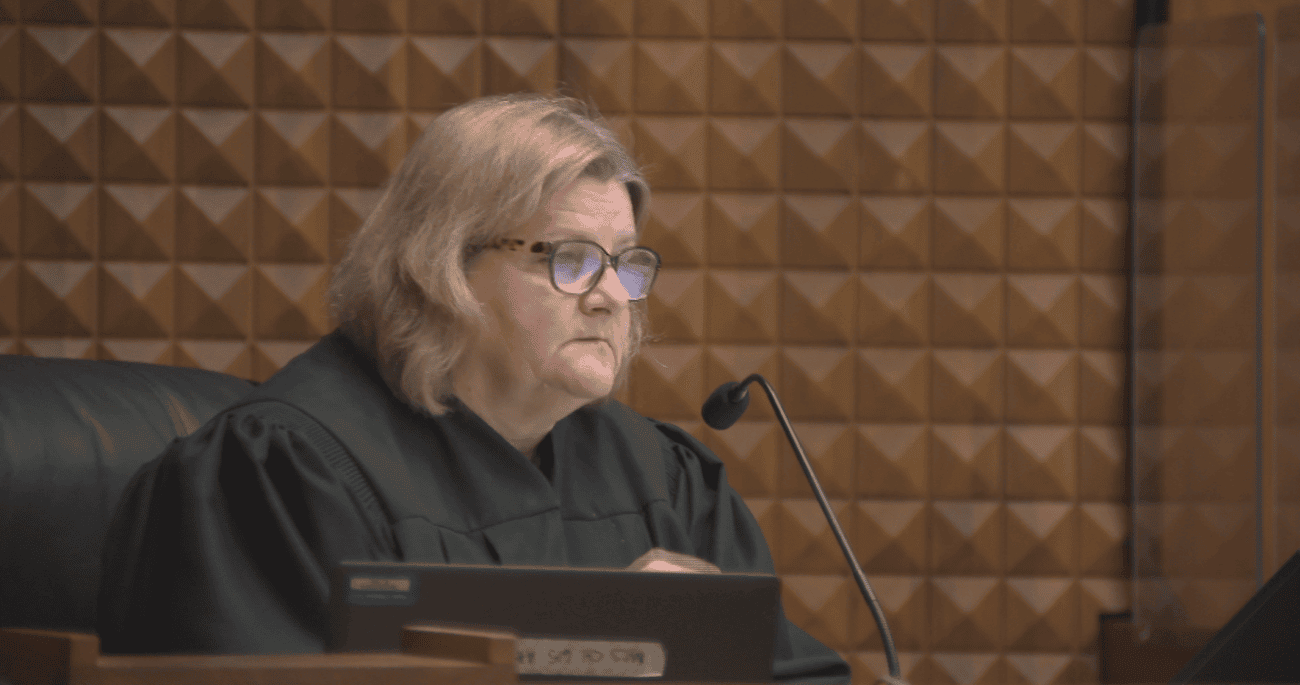
- In his article, Cheney quotes just one “Trump appointee,” Judge Gary Brown, who ruled in favor of an ICE detainee while writing, “This isn’t how things are supposed to work in America. Unquestionably, the laws of human decency condemn such villainy.”
- In reality, Brown was first nominated to the bench by Barack Obama and wasn’t confirmed by the Republican majority Senate but was later appointed by Trump as part of a “compromise package of nominees” with Democrat senators Chuck Schumer and Kirsten Gillibrand because “senators can hold up judicial” nominees “via a system known as the ‘blue slip process.’”
- As the legislative centerpiece of his article, Cheney quotes a federal law that requires immigration officials to detain certain aliens who are “seeking admission” to U.S. and writes that “every previous administration has interpreted the provision to apply primarily to people who were apprehended at the border,” not “millions of immigrants who have lived in the U.S. for years.”
- In reality, Cheney linked to an outdated 1994 version of a statute before it was significantly revised by the Illegal Immigration Reform and Immigrant Responsibility Act of 1996.
- Unlike the outdated statute cited by Cheney, the current law states that an “alien present in the United States who has not been admitted” is “deemed for purposes of this chapter an applicant for admission.”
- That essential fact, ignored by Cheney, is at the crux of seven opposing rulings on this matter by three-judge panels of federal appeals courts, every one with a dissent.
- Cheney closes his Politico article by quoting “U.S. District Judge Fred Biery, a Clinton appointee,” who ordered the “release of 5-year-old Liam Conejo Ramos” while declaring, “Observing human behavior confirms that for some among us, the perfidious lust for unbridled power and the imposition of cruelty in its quest know no bounds and are bereft of human decency. And the rule of law be damned.”
- In reality, Biery freed Ramos’s father, who chose to take his 5-year-old son with him to ICE detention instead of leaving him with his mother.
- Furthermore, Biery justified his ruling by asserting that the “Constitution” doesn’t allow ICE to detain “undocumented people” without “warrants” from an “independent judicial officer,” despite federal law and numerous Supreme Court rulings that state the polar opposite, as documented below.
- The federal law that governs the “apprehension and detention of aliens” states that they “may be arrested and detained pending a decision on whether the alien is to be removed” on a “warrant issued by the Attorney General,” which is not a judicial warrant but an administrative one.
- The Supreme Court ruled in Demore v. Kim that “although the Fifth Amendment entitles aliens to due process in deportation proceedings,” “detention during such proceedings is a constitutionally valid aspect of the process.”
- The Supreme Court ruled in Wong Wing v. United States that the “detention or temporary confinement” of illegal aliens to ensure their “exclusion or expulsion” is “not imprisonment in a legal sense.”
- The Supreme Court ruled in Harisiades v. Shaughnessy that “deportation” has “been consistently classified as a civil, rather than a criminal, procedure.”
- The Supreme Court ruled in Bugajewitz v. Adams that “deportation” is not based on the “conviction of crime, nor is the deportation a punishment; it is simply a refusal by the government to harbor persons whom it does not want.”